 Best Garage Door Charlotte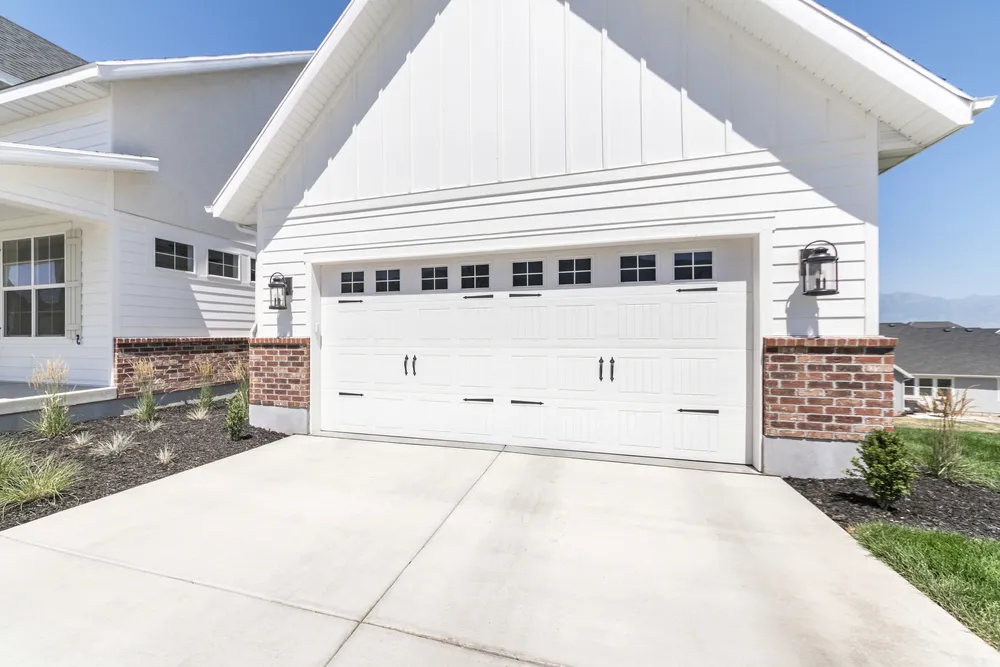
You probably do not think much about how long your garage door will last until it starts giving you problems. A spring snaps, the opener grinds, a panel dents, or the paint starts peeling. Then you start wondering whether it makes more sense to fix it or replace the whole thing. The answer depends partly on the door's age and partly on how Charlotte's weather has treated it over the years.
Garage doors are not built to last forever, and Charlotte's climate is harder on them than most people realize. Here is what to expect from each type of door, what wears out first, and how to tell when yours is reaching the end of its useful life.
Average Lifespan by Material
The material your door is made from is the single biggest factor in how long it will last. Here are realistic numbers for the Charlotte area, not the optimistic figures you see in manufacturer brochures. For a deeper comparison of these materials, see our wood vs. steel vs. aluminum guide.
Steel Doors: 20 to 30 Years
Steel is the most common garage door material in Charlotte, and it holds up the best over time. A quality steel door from Amarr, Clopay, or C.H.I. will last 20 to 30 years with basic maintenance. The steel itself does not wear out -- what fails is the finish and the moving parts. The paint will start fading at 8 to 12 years, especially on south-facing and west-facing garages that take full Charlotte sun all afternoon. Rust can develop at chips and scratches if you do not touch them up, and Charlotte's humidity accelerates that process.
Builder-grade single-layer steel doors -- the thin, uninsulated ones you find on many Charlotte homes built in the 1990s and 2000s -- have a shorter life, more like 15 to 20 years. They dent more easily and the thinner steel corrodes faster.
Wood Doors: 15 to 20 Years
Wood garage doors are beautiful but high-maintenance in Charlotte. The combination of summer humidity, heavy rain, and intense sun takes a toll. A well-maintained wood door can last 15 to 20 years, but "well-maintained" means refinishing every 3 to 5 years. If you skip the refinishing, moisture gets into the wood, the grain swells, paint peels, and rot starts. Once rot takes hold in the bottom section, you are looking at replacement, not repair.
Cedar and redwood hold up better than fir or hemlock because of their natural rot resistance. But even cedar needs regular sealing in our climate. If you love the wood look but do not want the maintenance, faux-wood composite or steel doors with a wood-grain finish give you a similar appearance with a much longer lifespan.
Aluminum Doors: 20 to 25 Years
Aluminum does not rust, which is a real advantage in Charlotte's humid climate. A quality aluminum door can last 20 to 25 years. The tradeoff is that aluminum dents more easily than steel and is harder to repair when it does dent. An aluminum door on a home in a neighborhood with active kids -- basketballs, bikes, skateboards -- will show wear faster than the same door on a quiet street.
Modern aluminum and glass doors, which are popular on contemporary homes in South End and NoDa, tend to last on the longer end of that range because the frames are thicker and the glass panels do not dent.
What Wears Out Before the Door Does
Your garage door is a system, not just the panels. Several components will need replacement well before the door itself is done.
Springs: 7 to 12 years. Torsion springs are rated for a specific number of cycles (one cycle = one open and close). Standard springs are rated for about 10,000 cycles. If you open and close your door 4 times a day, that is roughly 1,460 cycles per year, putting you at 7 to 8 years before the springs hit their limit. High-cycle springs rated for 25,000 or 50,000 cycles last proportionally longer. In Charlotte, springs also get stressed by temperature swings -- steel contracts in cold weather and expands in heat, which adds fatigue over thousands of cycles.
Openers: 10 to 15 years. A typical garage door opener lasts 10 to 15 years. Chain drives tend to last a bit longer mechanically than belt drives, but both wear out eventually. Power surges from Charlotte thunderstorms can fry circuit boards and shorten opener life. A good surge protector on the outlet is worth the $15 it costs.
Rollers: 5 to 10 years. Plastic rollers last about 5 years before they crack and start wobbling. Nylon rollers last 7 to 10 years. Steel rollers last longest but are the noisiest. Worn rollers cause the door to track poorly and put extra strain on the opener.
Weatherstripping: 3 to 7 years. The bottom seal and side weatherstripping degrade from UV exposure and compression. Charlotte's heat bakes rubber seals and cracks them. Replace the bottom seal whenever you see daylight under the closed door.
How Charlotte's Climate Reduces Lifespan
Charlotte sits in USDA hardiness zone 7b/8a with hot, humid summers, mild winters, and about 43 inches of rain per year. That combination is tougher on garage doors than a dry northern climate. Here is what does the most damage:
Humidity. Average summer humidity in Charlotte runs 70 to 85 percent. Moisture accelerates rust on exposed metal, swells wood, and degrades rubber seals and weatherstripping faster than dry air would. Garages that stay closed all day trap humidity inside, making it even worse.
UV exposure. Charlotte gets around 217 sunny days per year. That intense UV fades paint finishes, breaks down rubber and vinyl, and heats metal surfaces to temperatures that stress the finish. South-facing and west-facing doors take the hardest hit.
Storms. Charlotte averages 40 to 50 thunderstorm days per year, with occasional severe hail. A single hailstorm can dent a steel or aluminum door badly enough to need replacement. Falling tree limbs during storms are another common cause of premature garage door death.
Temperature swings. Charlotte can swing 30 to 40 degrees in a single day during spring and fall. Metal expands and contracts with each swing, stressing springs, tracks, and hardware. Over thousands of these cycles, fatigue builds up.
Signs Your Door Is Reaching End of Life
Here is how to tell whether your garage door is due for repair or replacement:
- Frequent breakdowns. If you are calling for repairs more than once a year, the door is telling you something. Two or three repair bills in a year often add up to half the cost of a new door.
- Sagging sections. Over time, door sections can warp, especially on wood and single-layer steel doors. If you see a visible bow when the door is horizontal in the open position, the sections are losing structural integrity.
- Persistent noise. All garage doors make some sound, but grinding, popping, or scraping that does not go away after lubrication suggests worn-out components that are not worth fixing on an old door.
- Visible rust or rot. Surface rust on steel can be treated. But if rust has eaten through the panel from the inside, or if wood rot extends into the structural frame, repair is not worth the money.
- High energy bills. An old, uninsulated door lets conditioned air escape from the house through the garage. If rooms above or adjacent to the garage are always too hot or too cold, a new insulated door can help.
- Outdated safety features. Doors installed before 1993 may lack the photoelectric sensors and auto-reverse features that are now mandatory. If yours does not have these, it is overdue for replacement regardless of condition.
When Repair Stops Making Sense
There is a rough formula that works for most Charlotte homeowners. If a repair costs more than 50 percent of what a new door would cost, replace it. If your door is older than 15 years and needs a repair over $400, replace it. If you have had two or more repairs in the last 12 months, replace it.
A new standard steel insulated door with installation runs $1,200 to $2,500 in the Charlotte market. Premium doors go higher. But a new door also comes with new springs, new hardware, modern safety features, better insulation, and a fresh warranty. That is a lot of value compared to patching an old door that will need something else in six months.
How to Extend Your Door's Life
Basic maintenance adds years to any garage door. Here is the short version:
- Lubricate moving parts (hinges, rollers, springs, bearing plates) every 6 months with white lithium grease or silicone spray.
- Inspect and tighten hardware twice a year. Bolts and brackets loosen from vibration.
- Touch up paint chips immediately, especially on steel doors. Exposed metal rusts fast in Charlotte humidity.
- Replace the bottom seal as soon as it cracks or flattens.
- Keep the tracks clean and free of debris.
- Test the auto-reverse safety feature monthly.
A door that gets this level of attention will reach the top end of its lifespan range. One that gets neglected will hit the bottom end -- or worse.
Not sure if your garage door has life left or if it is time for a new one? Call for a free assessment from a Charlotte garage door pro who can give you an honest opinion and a quote if you decide to replace.