 Best Garage Door Charlotte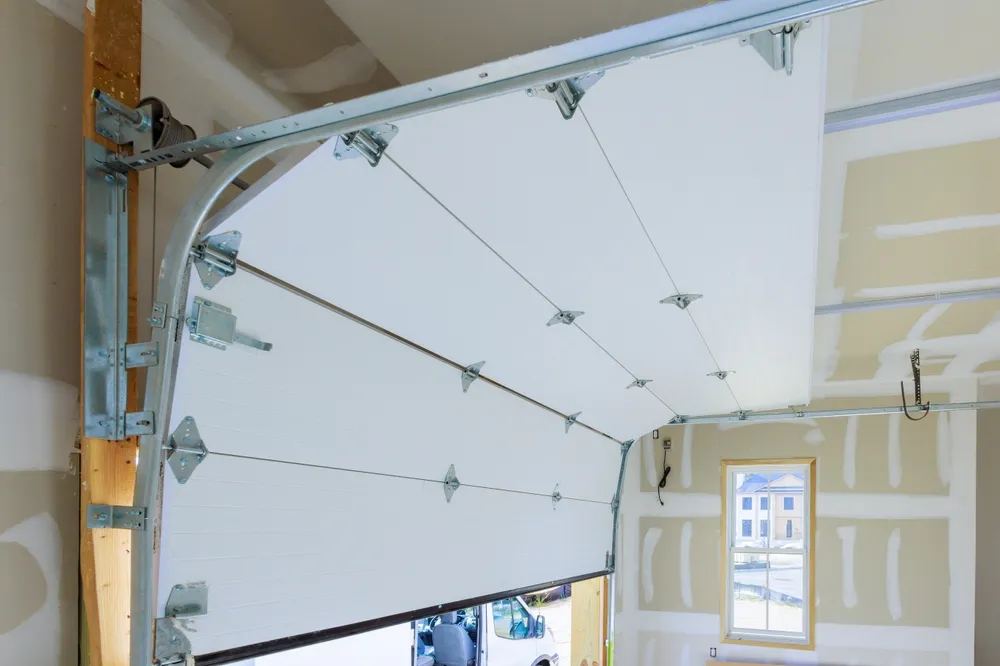
Every garage door makes some noise. A certain amount of mechanical sound is normal when you are lifting and lowering a 150 to 400 pound panel several times a day. But there is a difference between normal operational sound and the kind of noise that means something is wearing out, broken, or about to fail. If your garage door has started making a new sound -- or an old sound has gotten louder -- it is worth figuring out what is going on before a minor issue turns into a major repair.
Here is a breakdown of the most common garage door noises, what causes each one, whether you can fix it yourself, and when it is time to call a professional.
Grinding: Metal on Metal
A grinding noise is what Charlotte homeowners call about more than almost anything else, and it usually points to one of two problems: worn rollers or a misaligned track.
Worn rollers are the most frequent cause. Garage door rollers are small wheels that ride inside the vertical and curved sections of the track. Most standard doors come with steel rollers that have a 10,000 to 15,000 cycle lifespan. If your household opens and closes the garage door four times a day, that is about 1,460 cycles per year, which means the rollers wear out in roughly seven to ten years. As the bearings inside the rollers degrade, metal starts grinding against metal, and you hear it on every cycle.
The fix for worn rollers is replacement. A set of rollers for a standard two-car door costs $50 to $100 for parts if you do it yourself, or $100 to $200 if a technician handles it. If you upgrade from steel to nylon rollers at the same time, the door will be dramatically quieter going forward. Nylon rollers cost a bit more but last longer and produce almost no noise.
Track misalignment is the other common cause of grinding. If the vertical tracks are not plumb or the curved sections have been bumped or bent, the rollers have to force their way through tight spots, which creates a grinding or scraping sound. Look along the track for any visible bends, dents, or spots where the gap between the roller and the track wall looks tighter on one side than the other. Minor track adjustments are possible for a handy homeowner, but if the track is bent or damaged, it needs professional attention.
Squealing or Screeching: Friction Problems
A high-pitched squeal or screech during operation almost always means something is moving without enough lubrication. The most common culprits are:
- Dry hinges. The hinges connecting each door panel pivot every time the door opens and closes. Without lubrication, the metal-on-metal contact produces a squeal. This is especially common in Charlotte homes after a long, humid summer, when moisture accelerates corrosion and washes away lubricant.
- Dry torsion spring coils. The torsion spring above the door winds and unwinds with every cycle. When the coils are dry, they rub against each other and produce a squealing or groaning noise. A light coat of silicone lubricant on the spring coils usually stops it immediately.
- Worn bearing plates. The bearing plates at the top corners of the door, where the spring shaft passes through, have bearings that can dry out or wear down over time. When they fail, you get a high-pitched whine or screech that is loudest when the door first starts moving.
The fix for squealing is usually simple. Grab a can of silicone-based garage door lubricant and hit the hinges, the spring coils, and the bearing plates. Work the door up and down a couple of times to distribute the lubricant. If the squeal goes away, you are done. If it comes back within a few days, the underlying part may be worn out and need replacement rather than just lubrication. Our maintenance guide covers the proper lubrication process in detail.
Popping or Snapping: Something Is Shifting
A single loud pop or snap -- especially when the door first starts moving -- is startling and usually gets people's attention fast. Here is what it typically means:
Torsion spring adjustment. The most common cause of a single loud pop is the torsion spring shifting on the shaft. As the spring winds and unwinds thousands of times, it can gradually shift position on the torsion bar. When it finally slips to a new position, it makes a sharp popping or snapping sound. This is not dangerous by itself, but it can indicate the spring is wearing or the set screws on the spring cone are loosening. Have a technician check it during the next service visit.
Temperature-related expansion. This one is specific to our climate. Charlotte's temperature swings -- from the low 30s on a January morning to the mid 50s by afternoon, or from a cool 65-degree morning to a 95-degree summer afternoon -- cause metal components to expand and contract. Sometimes the track, the spring, or the door panels shift slightly as they heat up or cool down, producing a pop. If you only hear the pop on the first cycle of the day and it goes away after that, temperature is almost certainly the cause. It is not a sign of a problem.
Broken spring. If you hear a very loud bang -- more like a gunshot than a pop -- and the door suddenly feels extremely heavy or will not open at all, a torsion spring has broken. This is unmistakable. The noise is loud enough to hear from inside the house, even from another floor. Do not try to operate the door. A broken spring means the full weight of the door is unsupported, and running the opener can damage the door, the opener, and the cables. Read our guide on what to do when a garage door spring breaks for the full rundown on next steps.
Rattling or Vibrating: Loose Parts
A rattling, vibrating, or buzzing noise during operation usually means something has come loose. Garage doors go up and down 1,500 or more times per year, and all that vibration gradually loosens hardware. The rattling gets worse over time as the loose part has more room to move around.
Common sources of rattling include:
- Loose hinge bolts. Check every hinge on the door with a socket wrench. You will probably find at least one or two that have backed off a quarter turn or more.
- Loose roller bracket bolts. The brackets that hold the rollers in place are bolted to the door panels. When these loosen, the whole roller assembly vibrates as the door moves.
- Loose opener chain or belt. If you have a chain-drive opener, the chain can loosen over time and slap against the rail during operation. A belt-drive opener can do the same thing, though it is less common. Most openers have a tensioning adjustment near the motor unit. Check the opener manual for the correct procedure. For a deeper comparison of how these two systems differ, see our article on belt drive vs chain drive openers.
- Loose opener mounting hardware. The opener itself is mounted to the ceiling or a bracket with bolts or lag screws. If these loosen, the entire opener vibrates during operation, and you hear it through the ceiling -- especially noticeable if there is a bedroom above the garage.
- Loose strut or support bar. On wider doors, especially double-car doors common in Charlotte neighborhoods like Ballantyne and Indian Trail, a horizontal strut reinforces the top panel. If this strut comes loose, it rattles against the door during every cycle.
The fix for rattling is usually a socket wrench and ten minutes of your time. Go through every piece of accessible hardware and tighten anything that has worked itself loose. If the rattling persists after tightening, the source might be internal to the opener motor or inside a sealed roller bearing, which would need replacement.
Banging or Slamming: Force and Balance Issues
If your garage door slams down the last few inches instead of settling gently into the closed position, or if it bangs at the top when opening, there is likely a balance or force-setting issue.
Spring balance problems. When the springs are not properly balanced, the door is heavier in one direction of travel than it should be. A door that slams closed is often under-sprung -- the springs are not providing enough lifting force, so gravity wins at the end of the travel. A door that bangs at the top is often over-sprung. Either way, the springs need adjustment by a professional. Do not try to adjust torsion springs yourself. They hold enough stored energy to cause serious injury.
Opener force settings. The opener has adjustable force settings that control how hard the motor pushes the door in each direction. If the close force is set too high, the door will slam into the floor. If it is too low, the door will stall before fully closing. Most openers have two small screws on the motor unit for adjusting open and close force. Small adjustments make a big difference.
Worn-out opener. Older openers, especially chain-drive models that are 15 or more years old, lose their ability to control the door smoothly. The motor may be wearing out, the chain may have excessive play, or the internal gears may be stripped. If adjusting the force settings does not help and the door is balanced correctly, the opener itself might be at the end of its life. Check out our guide to garage door openers if you think a replacement might be needed.
Clicking or Ticking: Usually the Opener
A rhythmic clicking or ticking sound during operation is usually coming from the opener drive system rather than the door itself. In chain-drive openers, it is often the chain riding over a worn sprocket or a link that has stiffened. In belt-drive openers, it can be a worn belt with a hardened section passing over the pulleys.
Listen carefully to pinpoint the source. Stand near the opener motor while the door operates. If the clicking is clearly coming from the opener unit, the drive mechanism is the issue. If it is coming from the door panels or the tracks, you are dealing with a roller or hinge problem instead.
A clicking chain can sometimes be fixed by lubricating the chain with a garage door-specific chain lubricant. If the sprocket is worn, the entire sprocket assembly will need replacement, which is a $50 to $100 part but requires some mechanical aptitude to install.
Humming but Not Moving: Opener Motor Problems
If you press the button and hear the opener motor humming or buzzing but the door does not move, the motor is running but the drive mechanism is not engaging. This can happen for a few reasons:
- The manual release is engaged. If someone pulled the emergency release cord and did not re-engage it, the opener will run but the trolley is disconnected from the door. Re-engage the trolley by pulling the cord toward the opener until it clicks back into place, then activate the opener.
- Stripped gears. Many residential openers use nylon or plastic gears inside the motor unit. Over time, these gears strip, especially if the opener has been working against an unbalanced door. When they strip, the motor spins but nothing moves. This is a common repair that runs $100 to $175 for parts and labor.
- Door is stuck or frozen. In Charlotte's occasional winter freezes, the bottom seal can bond to a wet garage floor. The motor tries to lift the door, cannot break the seal, and just hums. Break the ice seal by hand or with warm water before running the opener.
How Loud Is Too Loud?
All garage doors make some sound. The question is whether the sound level is normal for your type of door and opener, or whether it has changed.
A chain-drive opener is inherently louder than a belt-drive opener. That is just the nature of the mechanism. If you have a chain drive and it has always been loud, that is normal. If it suddenly got louder, something has changed and needs attention.
A non-insulated single-layer steel door is louder than an insulated door because it vibrates more. The panels flex and rattle in ways that a rigid insulated door does not. If you are tired of the noise and the door is a single-layer steel panel, upgrading to an insulated door will make a noticeable difference in how much sound the door itself produces.
As a general rule, you should be able to hold a normal conversation in the garage while the door is operating. If you have to raise your voice to be heard, something is wrong.
The Quick Noise Diagnostic Checklist
When your garage door starts making a new noise, work through this list before calling anyone:
- Lubricate everything. Hinges, rollers, springs, bearing plates. Use silicone-based lubricant, not WD-40. This fixes about half of all noise complaints on its own.
- Tighten all hardware. Go through every bolt you can reach with a socket wrench. Pay attention to hinges, roller brackets, and the opener mounting hardware.
- Check the chain or belt tension. If you have a chain drive, see if the chain is sagging more than half an inch below the rail. Adjust per the opener manual.
- Look at the rollers. If they are steel and more than seven years old, they are probably worn. Nylon replacements will quiet things down considerably.
- Listen to where the noise is coming from. Is it the door, the tracks, or the opener? Narrowing down the location makes diagnosis much easier.
If lubrication and tightening do not fix the noise, or if you hear a loud bang, constant grinding, or the opener humming without moving the door, it is time for a professional diagnosis. Small problems with garage doors tend to get bigger if they are ignored. A roller that costs $10 to replace today can damage a track that costs $200 to fix next month. A spring that is making noise might be a month away from snapping.
Hearing something from your garage door that does not sound right? Call to connect with a Charlotte garage door repair company that can diagnose the problem and give you a straight answer on what it will take to fix it.