 Best Garage Door Charlotte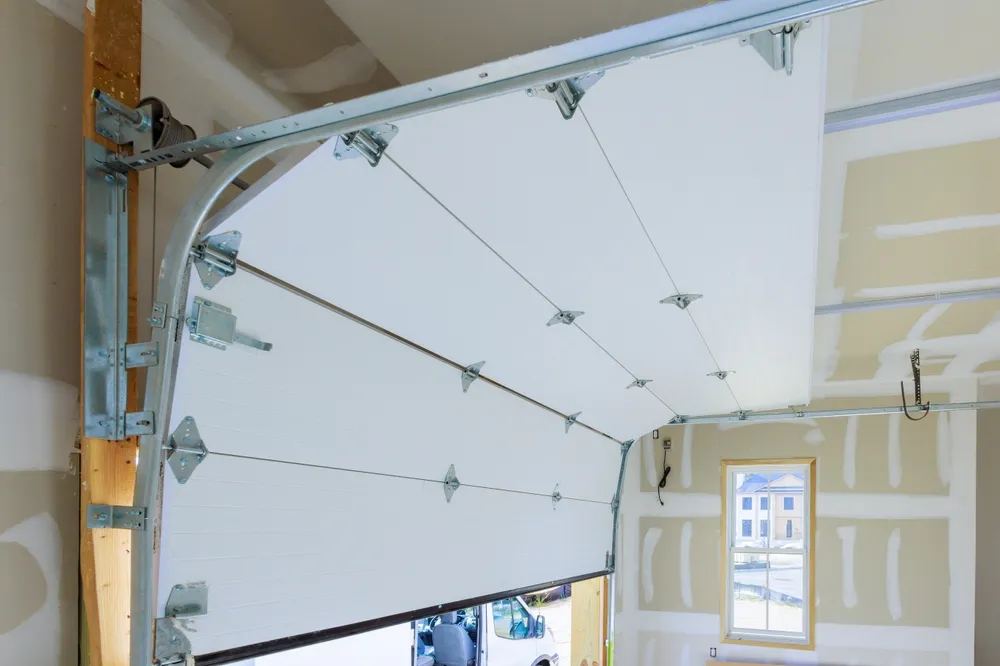
It usually happens at the worst possible time. You press the button to open your garage door, hear a loud bang like a gunshot, and the door either barely moves or lifts a few inches and stops. If this just happened to you, your garage door spring almost certainly broke. It is a very common repair across the Charlotte area -- alarming when it happens, but fixable, usually within a few hours once a technician arrives.
This article covers what happens when a spring breaks, what to do right away, how much it costs to fix in the Charlotte area, and how to avoid getting overcharged. If you are dealing with a broken spring right now and just need the price, skip to the pricing section. But read the safety stuff first -- it takes two minutes and could save you a trip to the ER.
What Happens When a Garage Door Spring Breaks
Garage door springs are under enormous tension. They carry the full weight of your door, which for a standard double-car insulated steel door is roughly 150 to 250 pounds. When a spring snaps, the stored energy releases all at once. Here is what you will typically notice:
- A loud bang. Many homeowners describe it as sounding like a gunshot or a car backfiring. If it happened while you were home, you probably heard it clearly from inside the house. Some people check their garage expecting to find something fallen off a shelf, only to see the broken spring.
- The door will not open. If you try the wall button or remote, the opener motor will strain and the door might lift a few inches, then stop. The opener is not designed to lift the full weight of the door by itself. The springs do that work.
- Visible damage. If you have torsion springs (the large spring or springs mounted on a metal shaft above the door), you will likely see a gap in the coil where the break occurred. If you have extension springs (long springs running along the horizontal tracks on each side), you might see a spring hanging loose or a cable that has gone slack.
- The door feels extremely heavy. If you try to lift the door manually (by pulling the emergency release cord and lifting from the bottom), it will feel like it weighs a ton. That is because without the springs counterbalancing the weight, you are trying to lift the entire door yourself.
What to Do Immediately
If your garage door spring just broke, follow these steps:
Do not try to open the door with the opener. Repeatedly pressing the button while the spring is broken puts serious strain on the opener motor and can burn it out. If the opener has already tried and failed, leave it alone.
Do not try to open the door manually. A double-car garage door without functioning springs weighs 150 to 250 pounds. Trying to lift it yourself risks back injury, and if you lose your grip, the door will slam down. This is especially dangerous if children or pets are nearby.
If the door is stuck partially open, do not try to force it closed. A door off-balance with a broken spring can jump the tracks, making the repair more expensive and creating a safety hazard. Leave it in whatever position it stopped.
Disconnect the automatic opener. Pull the red emergency release cord hanging from the opener rail. This disconnects the door from the opener so the motor is not straining against a door it cannot lift.
Secure your home. If the door is stuck open and you cannot close it, try to park a car in front of the opening or set up a temporary barrier. A garage left open overnight in any Charlotte neighborhood is an invitation for theft. If it is stuck closed, your car may be trapped inside, but at least the home is secure. Plan to use another exit.
Call a professional. This is not a repair you should attempt yourself, and we will explain why below.
Torsion Springs vs. Extension Springs
There are two types of garage door springs, and knowing which type you have helps you understand the repair and the cost.
Torsion springs are mounted on a metal shaft above the door opening, usually just above the top panel when the door is closed. They twist to store energy and untwist to release it when the door opens. Most Charlotte homes built or renovated in the last 20-25 years have torsion springs because they are safer, longer-lasting, and provide smoother operation. A standard residential door has one or two torsion springs depending on the weight of the door.
Extension springs are mounted along the horizontal tracks on both sides of the door, one on each side. They stretch and compress as the door moves. Extension springs are more common on older Charlotte homes and on lighter single-car doors. They are less expensive but do not last as long and can be more dangerous when they fail because the spring can fly loose if the safety cable is missing or broken.
In the greater Charlotte area, including neighborhoods like University City, Highland Creek, Harrisburg, and Concord, most homes built after 2000 have torsion springs. Many older homes in the inner-ring neighborhoods like Dilworth, NoDa, and Plaza Midwood still have extension springs, especially if the garage door system has never been updated.
Why This Is Not a DIY Repair
We get it. YouTube makes it look doable, and the parts cost $30 to $80 at a supply house. But spring replacement is one of the most dangerous home repairs out there. Here is why:
Torsion springs are wound under extreme tension. A spring for a typical double-car door stores enough energy to cause severe injury or death if it unwinds uncontrolled. Professional technicians use specialized winding bars and have training in how to safely release and reset the tension. The tools alone cost several hundred dollars, and using the wrong size or technique can turn the spring into a projectile.
Extension springs, while slightly less intimidating, are still under significant tension. If a safety cable is not properly threaded through the spring, a broken extension spring can fly across the garage at high speed.
Emergency rooms see garage door spring injuries every year, including crushed fingers, broken wrists, and worse. The $200 to $450 you spend on a professional repair is buying safety, a warranty, and the knowledge that the springs are properly sized and tensioned for your specific door. For more on why springs and cables demand respect, see our garage door safety guide for springs and cables.
How Much Does Spring Replacement Cost in Charlotte?
Here are the typical price ranges Charlotte homeowners pay for spring replacement in 2025:
- Single torsion spring replacement: $200 - $350
- Pair of torsion springs (both replaced at once): $250 - $450
- Extension spring replacement (pair): $150 - $250
- High-cycle torsion springs (25,000-50,000 cycles): $300 - $500 per pair
These prices include the springs, labor, and a service call fee. Most Charlotte garage door companies charge a service call fee of $50 to $85 that is folded into the total repair cost if you move forward with the work.
Why you should replace both springs at once: If one torsion spring broke and you still have a second one that is intact, it is strongly recommended to replace both at the same time. The second spring has the same age and wear as the one that just failed. It is very likely to break within a few months. Replacing both at once saves you a second service call ($50-$85) and ensures balanced tension on the door. Most reputable Charlotte technicians will recommend this, and the incremental cost for the second spring is usually only $40 to $80 since the labor is already being done.
What Affects the Price
Where your repair falls in those ranges depends on a few things:
Door weight and size. Heavier doors require larger, more expensive springs. A 16x7 insulated steel door needs bigger springs than a 9x7 single-car door. If you have a custom or oversized door, expect to pay toward the higher end of the range.
Spring quality and cycle rating. Standard springs are rated for about 10,000 cycles (one cycle = one open and close). If you open your garage door 4 times a day, that is roughly 7 years of life. High-cycle springs rated for 25,000 or 50,000 cycles cost more upfront but last 2 to 5 times longer. If you use your garage as your main entry point, which many Charlotte homeowners do, high-cycle springs are worth the extra money.
Time of day. Emergency or after-hours calls (evenings, weekends, holidays) often come with a premium of $50 to $150 on top of the standard repair cost. If your spring breaks on a Saturday morning and you can wait until Monday, you will usually save money. But if your car is trapped inside and you need to get to work, the after-hours fee is the cost of convenience.
Additional repairs. Sometimes a broken spring damages other components. The cable may need replacing ($20-$40 per cable plus labor), or the bottom bracket may be damaged. A technician should identify any additional repairs before starting work and give you a total price.
How Long Do Garage Door Springs Last?
Standard garage door springs are rated for about 10,000 cycles, which translates to roughly 7 to 12 years depending on how often you use the door. Charlotte's climate plays a role in spring longevity. The wide temperature swings, from humid summers in the 90s to occasional winter cold snaps in the 20s and teens, cause the metal to expand and contract repeatedly. This thermal cycling fatigues the steel over time and can shorten spring life compared to milder climates.
Humidity is another factor. Charlotte's average relative humidity hovers around 70-80% for much of the year. Moisture in the air promotes surface corrosion on springs, which weakens them. Applying a light coating of garage door lubricant (not WD-40, which is a solvent, not a lubricant) to your springs twice a year can reduce corrosion and extend their life. For a full checklist of preventive steps, see our garage door maintenance tips.
Signs Your Spring Is About to Fail
Springs rarely break without warning. Here are signs Charlotte homeowners should watch for:
- The door feels heavier than usual when lifting manually or the opener seems to strain more.
- The door does not stay open when lifted halfway and released. A properly balanced door with good springs should stay in place.
- Visible gaps or stretch marks in the spring coils. A torsion spring that is nearing failure may show a gap between coils that was not there before.
- Rust or corrosion on the spring surface, which is accelerated by Charlotte's humidity.
- The door opens unevenly or appears crooked. This can indicate one spring is weaker than the other.
- Squeaking or groaning sounds when the door moves, especially if lubrication does not resolve the noise.
If you notice any of these signs, call a garage door repair company in Charlotte for an inspection. Catching a failing spring early is far cheaper than dealing with a full break -- which always seems to happen on a Monday morning when you are already running late.
How to Find a Reliable Spring Repair Company in Charlotte
Broken spring repair is bread-and-butter work for garage door companies, so there is no shortage of options in the Charlotte area. A few things to look for when picking one:
- Get a price over the phone. A reputable company should be able to give you a ballpark price for spring replacement once they know your door type and size. If someone refuses to give any pricing and insists on an in-person visit first, be cautious.
- Ask about warranties. Most quality spring replacements come with a warranty on parts and labor. One year is standard. Some companies that install high-cycle springs offer longer warranties.
- Confirm they carry parts on the truck. A good garage door service company carries the most common spring sizes on their truck and can complete the repair in one visit. If they need to order parts and come back, that is unusual for a standard spring replacement.
- Beware of bait-and-switch pricing. Some companies advertise very low spring prices ($49 or $79) and then add on service fees, labor charges, and mandatory upsells that inflate the total far beyond what competitors charge. Ask for the total out-the-door price.
Get Your Spring Fixed Today
A broken garage door spring is inconvenient, but it is a routine repair that most Charlotte garage door companies can handle the same day you call. Typical repair time is 30 to 60 minutes once the technician is on site. If your door is stuck and you are not sure whether the spring is the issue, our guide on why your garage door won't open walks through other common causes.
If your garage door spring broke and you need help finding a reliable repair company in Charlotte, Ballantyne, Lake Norman, Fort Mill, Matthews, or anywhere in the greater metro area, call us at . We will connect you with an experienced local technician who can get your door working again quickly and at a fair price. No scare tactics, no unnecessary upsells, just an honest repair from someone who knows what they are doing.