 Best Garage Door Charlotte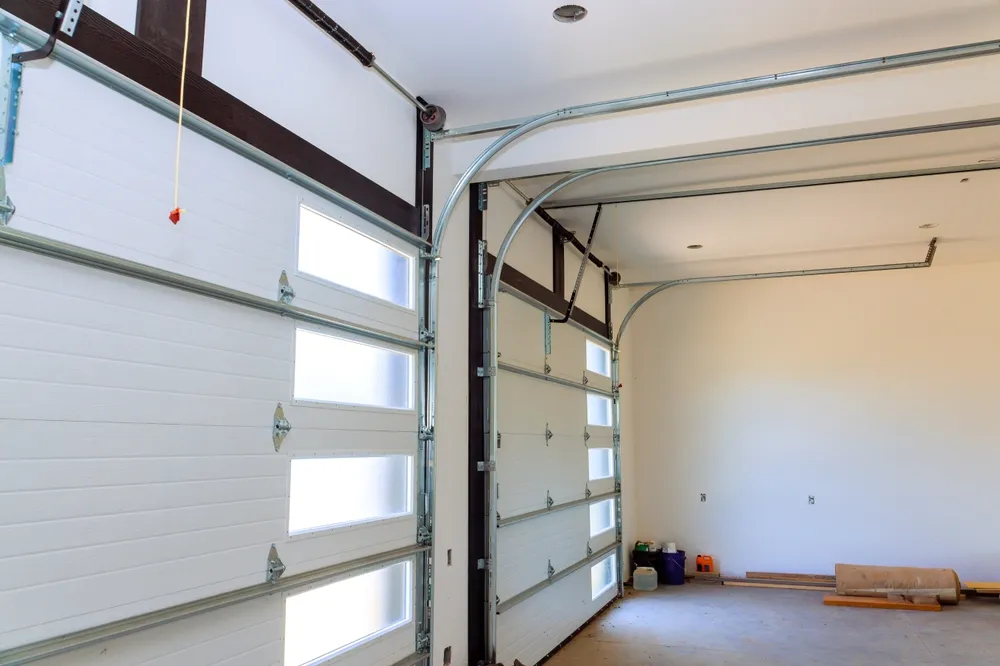
You are running late for work, you press the button on your garage door remote, and nothing happens. Or the motor hums but the door stays put. Or the door starts to open and then reverses back down. Whatever the symptom, a garage door that won't open is maddening -- especially in Charlotte where most people use the garage as their main way in and out of the house.
The good news: a lot of the common causes are things you can diagnose and sometimes fix yourself in a few minutes. Others need a pro. Here are the most common reasons your garage door will not open, starting with the simplest fixes and working up to the problems that require a technician.
1. Dead Remote Batteries
This is the single most common reason for a garage door that "won't open." Before you do anything else, try the wall-mounted button inside your garage. If the door opens fine from the wall button but not the remote, replace the battery in your remote. Most garage door remotes use a CR2032 coin-cell battery that costs about $3 and takes 30 seconds to swap.
What you see: Nothing happens when you press the remote. No clicking, no light on the opener motor.
The fix: Pop open the back of the remote, replace the battery, and try again. If you have multiple remotes (car visors, keypad), test each one. If the wall button also does not work, the problem is something else.
2. Photo Eye Sensors Are Blocked or Misaligned
Every garage door opener manufactured after 1993 has photo eye safety sensors at the bottom of the door tracks, about 6 inches off the ground. These sensors shoot an infrared beam across the door opening. If the beam is interrupted, the door will not close (and in some cases, will not open). This is a federal safety requirement designed to prevent the door from closing on a person, pet, or object.
What you see: The door starts to close, then immediately reverses. Or it opens partway and stops. The LED lights on one or both sensors may be blinking rather than steady.
The fix: Check for obstructions, including a cobweb, a leaf, a child's toy, or even a buildup of dirt on the sensor lens. Clean the lenses with a soft cloth. If the LED on one sensor is blinking, it is probably misaligned. The sensors need to point directly at each other. Gently adjust the sensor that is blinking until the LED turns solid. In Charlotte, spiders love to build webs across sensor lenses in the warmer months, and this alone accounts for a surprising number of "my door won't close" calls to local repair companies.
3. The Opener Is Unplugged or a Breaker Tripped
It sounds too obvious to mention, but it happens more often than you would think. The opener unit plugs into a standard outlet on the ceiling of your garage. If the plug got knocked loose, or if a circuit breaker tripped during a Charlotte thunderstorm (we get plenty of those from May through September), the opener has no power.
What you see: Nothing happens when you press the wall button or the remote. No light on the opener, no motor noise, nothing.
The fix: Check the outlet. Make sure the plug is fully seated. If it is plugged in and still nothing, go to your electrical panel and look for a tripped breaker. A tripped breaker will be in the middle position between on and off. Flip it fully off, then back on. Summer storms in Charlotte regularly cause power surges that trip breakers. If the breaker trips again immediately after resetting, you may have an electrical issue that needs an electrician.
4. The Manual Lock Is Engaged
Many garage doors have a manual slide lock built into the door itself, separate from the opener. It is the T-handle or the horizontal bar that slides through brackets on the track. If someone accidentally engaged this lock, the opener will try to lift the door but cannot because the lock physically prevents it from moving.
What you see: The opener motor runs, you hear straining and grinding, but the door does not move. You may also hear a loud banging as the opener tries to force the locked door.
The fix: Look at the inside of your garage door for a lock bar or T-handle. If the bar is slid into the track bracket, pull it back to the unlocked position. This is common after a power outage when someone locked the door manually for security and forgot to unlock it before using the opener again.
5. Broken Garage Door Spring
If your garage door spring is broken, the opener cannot lift the door because the springs do most of the heavy lifting. The opener motor alone is not strong enough to raise the full weight of the door.
What you see: The opener motor strains and the door barely lifts a few inches, then stops. Or you heard a loud bang (like a gunshot) sometime before the door stopped working. Look at the springs above the door. If you see a gap in the coil or a spring hanging loose, that is your answer.
The fix: This is not a DIY repair. Garage door springs are under extreme tension and can cause serious injury if handled incorrectly. Do not try to force the door open. Call a professional garage door repair company. In Charlotte, most companies can do same-day or next-day spring replacement for $200 to $450 depending on the spring type and size. For more details on spring replacement, read our full guide: Garage Door Spring Broke? Here's What to Do and What It Costs.
6. Stripped Gear in the Opener
Inside your garage door opener is a set of gears, usually made of nylon or plastic, that transfer the motor's power to the drive mechanism. Over time, and especially if the opener has been straining against a heavy or binding door, these gears can strip.
What you see: The motor runs (you can hear it), the light comes on, but the drive chain, belt, or screw does not move. The motor sounds normal but the door just sits there.
The fix: A stripped gear requires a technician to open the opener unit and replace the gear and sprocket assembly. This repair typically costs $125 to $250 in the Charlotte area. However, if the opener is more than 15 years old, it may make more sense to replace the entire opener rather than repair it, since a new opener with modern safety and smart features runs $250 to $500 installed.
7. Track Obstruction or Bent Track
The garage door rides in vertical and horizontal tracks on both sides. If something is stuck in the track, or if the track itself is bent or misaligned, the door can get jammed.
What you see: The door starts to move and then stops or makes a grinding, scraping sound. You may see the door sitting crooked or one side higher than the other. Looking along the tracks, you might spot a dent, a bend, or a piece of debris.
The fix: Visually inspect the tracks from top to bottom on both sides. Remove any obvious debris (a fallen screw, a pebble, a child's ball). If the track itself is bent, do not try to hammer it back into shape while the door is in the track. This can make things worse. A minor track adjustment is something a technician can handle for $100 to $200. A track that is severely damaged needs to be replaced.
8. Broken Cable
Lift cables run from the bottom brackets of the door up to the spring mechanism. They work in conjunction with the springs to raise and lower the door. If a cable snaps, the door may hang unevenly or refuse to move.
What you see: The door is crooked or one side has dropped lower than the other. You may see a cable hanging loose or coiled on the floor. The door may move a few inches and then jam.
The fix: Do not try to open or close the door. A broken cable means the door is not properly supported and can fall unexpectedly. Call a professional. Cable replacement is a quick repair, usually $75 to $175 including parts and labor, but it involves working around the spring system, which requires proper training.
9. Weather-Related Issues
Charlotte weather causes a few garage door problems that are worth knowing about.
Ice buildup in winter: Charlotte does not get frequent ice storms, but when they happen (usually once or twice a year, sometimes worse), ice can form along the bottom seal of the garage door and literally freeze the door to the garage floor. If you try to open the door with the opener while it is frozen to the ground, you can damage the opener, strip the gears, or tear the bottom weatherstripping.
The fix: If you suspect the door is frozen to the floor after an ice event, pour warm (not boiling) water along the bottom seal to melt the ice. You can also use a heat gun or hair dryer. Once the ice melts, the door should open normally. To prevent this, keep the bottom seal clean and apply a silicone-based lubricant to it before winter weather arrives.
Humidity swelling wood doors: If you have a real wood garage door, and some older Charlotte homes in Dilworth, Myers Park, and Elizabeth still do, humidity can cause the wood to swell. This is most noticeable in summer when Charlotte humidity regularly exceeds 80%. A swollen wood door may bind against the frame or tracks and refuse to open smoothly.
The fix: Long-term, the solution is to make sure the wood door is properly sealed and painted or stained on all surfaces, including the top, bottom, and edges that are not visible. In the short term, you may need to sand or plane the edges that are binding. If your wood door is chronically swelling, it may be time to consider replacing it with a composite or steel door that will not react to Charlotte's humidity.
Heat affecting electronics: On the hottest Charlotte summer days, when garage temperatures can reach 120 degrees or more in direct sunlight, the circuit board inside your garage door opener can overheat and stop working. This is more common with older openers that lack thermal overload protection.
The fix: Let the opener cool down. If the motor ran and overheated, it may have a thermal cutoff that resets after 15 to 30 minutes. If this happens repeatedly, improving your garage ventilation or insulation can help keep temperatures lower. Newer smart garage door openers handle heat better than models from the 1990s and early 2000s.
10. Power Outage: How to Open Your Door Manually
Charlotte gets its share of power outages, especially during summer thunderstorms and the occasional ice storm. When the power goes out, your automatic opener will not work. But you can still open the door manually.
Step 1: Locate the red emergency release cord hanging from the opener rail. It is usually near the opener motor.
Step 2: Pull the cord straight down (not toward the door). This disconnects the door from the opener's drive mechanism.
Step 3: Lift the door from the bottom with both hands. With functioning springs, it should lift relatively easily. Guide it up and it should stay in the open position.
Step 4: When power returns, close the door manually, then re-engage the opener by pressing the wall button or remote. The opener trolley should reconnect with the door. Some models require you to pull the emergency cord again in a different direction to re-engage.
Safety note: Only open the door manually if the springs are intact. If a spring is broken, the door will be extremely heavy and dangerous to lift. In that case, leave the door closed and use another exit until a technician can repair the spring and power is restored. Read our garage door safety guide for more on spring and cable hazards.
When to Call a Professional
Here is a quick reference for what you can handle yourself and what needs a pro:
DIY fixes: Dead remote battery, blocked or dirty photo eye sensors, unplugged opener, tripped breaker, engaged manual lock, frozen door in winter, manual release during power outage.
Call a professional: Broken spring, broken cable, stripped opener gear, bent or damaged track, door hanging crooked, door falling fast when closing, any situation where you hear unusual grinding or banging and cannot identify the cause.
When in doubt, call a pro. Garage doors are heavy and operate under significant spring tension. A repair that seems simple can become dangerous quickly if something unexpected happens. Most Charlotte garage door repair companies charge a service call fee of $50 to $85 that is applied toward the repair if you move forward.
Still stuck after running through all of this? Call us at . We will connect you with a reputable local technician who can diagnose and fix the problem, usually the same day. We serve homeowners across the Charlotte metro -- Ballantyne, Lake Norman, Matthews, Fort Mill, Huntersville, Concord, and surrounding communities.