 Best Garage Door Charlotte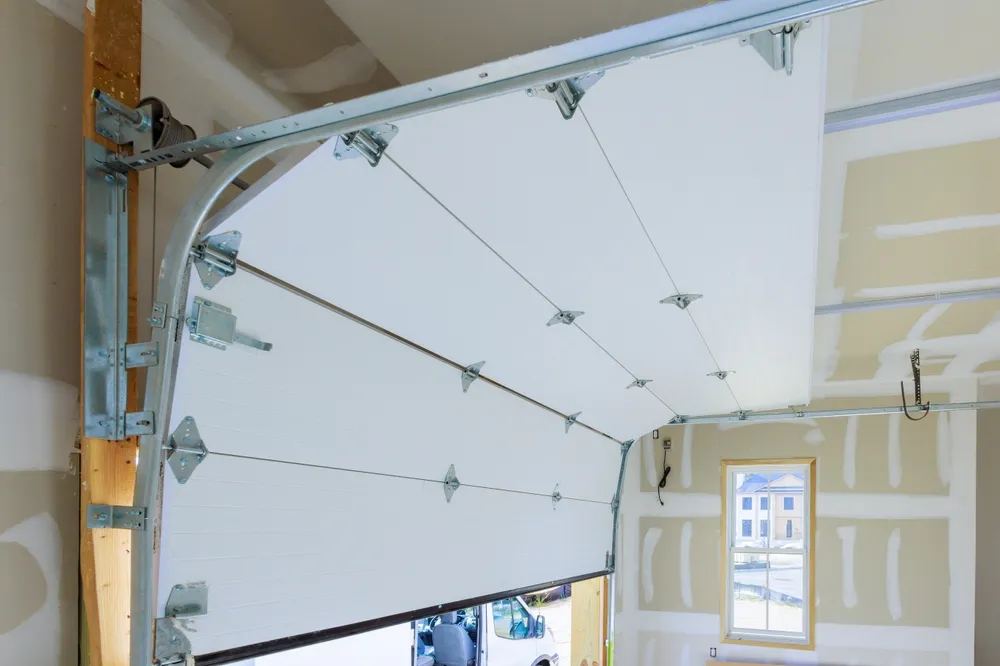
A garage door off its track is one of those problems that stops everything. One second the door is working normally, and the next it is stuck at an angle, jammed halfway up, or hanging with a visible gap on one side. It looks wrong, it sounds wrong, and trying to force it to move only makes things worse. If your garage door has come off track in Charlotte or the surrounding area, here is what likely caused it, what you should do right now, and how much it will cost to get it fixed.
What Does "Off Track" Actually Mean?
Your garage door runs on a pair of vertical metal tracks mounted to the door frame, with curved sections at the top that transition to horizontal tracks running along the ceiling of the garage. Small rollers attached to the door panels ride inside these tracks, keeping the door aligned as it goes up and down.
When a garage door goes off track, one or more of those rollers has popped out of the track channel. The door is no longer guided properly, so it tilts, binds, or gets stuck. In some cases only one roller slips out and the door looks slightly crooked. In worse cases, multiple rollers come out and the door drops or hangs at a sharp angle. Either way, the door cannot operate safely until the rollers are back in the track and whatever caused the problem is fixed.
The Five Most Common Causes
A garage door does not jump off track for no reason. Something went wrong mechanically, and figuring out the cause matters because it determines what kind of repair is needed.
1. A Broken Lift Cable
This is the most common cause of a garage door going off track. The lift cables run from the bottom bracket of the door up to the cable drum at the top of the door frame, one on each side. They work with the torsion spring to lift and lower the door in a controlled way. When one cable snaps, the side without cable support drops suddenly while the other side stays up. That uneven force pulls the rollers out of the track on the dropped side.
You can usually tell if a cable broke because the door will be visibly lower on one side than the other, and you will see the broken cable hanging loose. Cables fail due to age, fraying from rubbing against a worn drum, or corrosion. In the Charlotte area, where humidity regularly pushes above 80 percent during summer months, cable corrosion happens faster than in drier climates. For a deeper look at cable and spring issues, check out our guide to garage door springs and cables.
2. A Vehicle Hit the Door
Backing into a partially open garage door, or bumping the bottom panel while pulling in, is more common than most homeowners want to admit. It does not take much force to push the bottom of the door inward enough to pop the bottom rollers out of the track. This is especially common with single-car garages in older Charlotte neighborhoods like Dilworth, Plaza Midwood, and NoDa, where garages tend to be tighter and the approach angle from narrow driveways can be awkward.
An impact does not always show obvious dent damage on the door panel. Sometimes the panel looks fine but the bottom roller brackets are bent, which allows the rollers to slip out the next time the door operates.
3. Worn-Out Rollers
Garage door rollers have a limited lifespan. Standard steel rollers last about 10,000 to 15,000 cycles, which works out to roughly seven to ten years of typical household use. As the rollers wear, they develop flat spots, wobble, or the bearing seizes completely. A seized roller cannot spin inside the track, so instead of rolling smoothly it drags and skips. Eventually it catches on a bend in the track and pops out.
Worn rollers often give you warning signs before they cause a full off-track situation. You might hear grinding, scraping, or clicking sounds during operation, or notice the door hesitating at certain points in its travel. If you catch worn rollers early, replacing them is a simple repair. If you wait until the door goes off track, the repair gets more involved because the track itself may also be damaged.
4. A Broken Torsion Spring
When a torsion spring breaks, the door loses most of its counterbalance force instantly. The full weight of the door -- 150 to 400 pounds depending on size and material -- drops onto the opener, the cables, and the tracks in a way they are not designed to handle. The sudden shift in forces can pull rollers out of the track, especially at the top section where the curved track meets the horizontal track.
A broken spring usually announces itself with a loud bang, like a firecracker going off in the garage. If you heard a loud noise and then found the door off track, a broken spring is almost certainly the cause. The spring will have a visible gap in the middle where it snapped.
5. A Bent or Damaged Track
The tracks themselves can get bent or dented from impacts, from years of vibration, or from shifting of the door frame. A dent in the track creates a narrow spot that the rollers have to squeeze through. If the dent is bad enough, the roller gets stuck and pops out rather than forcing its way through. Track damage can also happen if the mounting brackets loosen and the track shifts out of alignment.
Track problems are more common in homes built on the red clay soils found throughout Mecklenburg County and the surrounding Piedmont region. As clay soils expand and contract with moisture changes, foundations can shift slightly, which moves the door frame, which pulls the tracks out of alignment. Homes in areas like Huntersville, Matthews, and Indian Trail that were built on graded lots with fill dirt are particularly prone to this kind of settling.
What to Do Right Now
If your garage door is off track, here is what you should do immediately and what you should not do.
Do not try to force the door open or closed. This is the single most important thing. Forcing a door that is off track can bend the tracks further, snap cables, damage panels, or cause the door to fall completely. A garage door that is partially off track is being held up by the remaining rollers and whatever tension is left in the spring system. Forcing it moves those loads in unpredictable ways.
Do not try to run the opener. If the door went off track while it was moving, do not press the button again. The opener motor will try to force the door through a path it cannot follow, and that can strip the opener gears, bend the track, or pull additional rollers out.
Disconnect the opener. Pull the red emergency release cord that hangs from the opener trolley. This disconnects the door from the opener so the motor cannot accidentally engage. If you have a smart opener or a wall-mounted control with a lock function, use that too.
Secure the door in place. If the door is partially open and you are worried about it falling, you can clamp a pair of locking pliers or a C-clamp onto the track just below one of the rollers that is still in the track. This acts as a stop to keep the door from sliding down further. If you do not have clamps, just leave the door where it is and keep people and vehicles away from it.
Call a professional. An off-track garage door is not a repair to attempt yourself in almost every case. The reasons are explained below.
Can You Fix an Off-Track Garage Door Yourself?
The short answer is: probably not, and you should not try. Here is why.
Getting rollers back into the track requires loosening the track mounting brackets, prying the track open enough to slip the roller back in, closing the track back up, and then re-aligning everything so the door runs straight. While that description sounds simple, the reality involves working with a door that weighs 150 to 400 pounds and may be under spring tension that wants to move it in one direction or another. One wrong move and the door drops, the track bends further, or a cable snaps under the shifted load.
If the off-track situation was caused by a broken spring or broken cable, you are dealing with high-tension hardware that can cause serious injury. Torsion springs hold enough stored energy to break bones. Cables under tension can whip and cut. These are not DIY-friendly components.
The one exception is if a single bottom roller has barely slipped out of the track on a door that is fully closed and resting on the ground. In that case, the door is not under any spring or cable tension, and you may be able to push the roller back into the track with a pair of pliers. But even then, something caused the roller to pop out in the first place, and that underlying cause needs to be identified and fixed or it will happen again.
For Charlotte-area homeowners, getting professional help is the right call. A garage door repair technician has the tools, the training, and the experience to get the door back on track safely and diagnose whatever caused the problem. Attempting it yourself risks turning a $200 repair into a $1,000 replacement.
How Much Does an Off-Track Repair Cost?
In the Charlotte metro area, the cost to fix an off-track garage door typically runs between $125 and $400, depending on what caused the problem and what else needs to be replaced.
- Simple re-tracking (rollers popped out, no other damage): $125 to $200. This covers the service call, getting the rollers back in the track, and re-aligning the tracks.
- Re-tracking plus roller replacement: $175 to $275. If the rollers that came out are worn or damaged, they should be replaced at the same time. Most technicians will recommend replacing all the rollers at once rather than just the ones that came out.
- Re-tracking plus cable replacement: $200 to $350. If a broken cable caused the door to go off track, the cable (and usually both cables) needs to be replaced along with the re-tracking work.
- Re-tracking plus track repair or replacement: $250 to $400. If the track itself is bent or damaged, it may need to be straightened or replaced. Replacing a full vertical track section runs on the higher end of this range.
If the off-track situation was caused by a broken torsion spring, the spring replacement is a separate cost on top of the re-tracking work. A torsion spring replacement in Charlotte runs $175 to $350, so the total bill for a spring-caused off-track event is typically $300 to $600.
These prices are typical for the greater Charlotte area including Huntersville, Cornelius, Matthews, and Fort Mill. Emergency or same-day service may add $50 to $100 to these prices, though many companies in the area include the service call fee in the repair cost.
How Long Does the Repair Take?
A basic off-track repair where the rollers just need to be put back in the track and the alignment checked takes about 30 to 45 minutes once the technician arrives. If the repair also involves replacing rollers, cables, or straightening a track, expect 45 minutes to an hour and a half.
If a broken spring caused the problem, the spring replacement adds another 30 to 60 minutes, so the full repair could take up to two hours. In most cases, this is a one-visit repair. The technician arrives, diagnoses the cause, fixes it, and tests the door before leaving.
Getting a technician out to your home depends on the season. During Charlotte's spring storm season -- March through June, when thunderstorms and high winds are most frequent -- garage door companies get a spike in off-track and storm damage calls. Wait times during busy periods can be a day or two. In quieter months like January or February, same-day or next-day service is usually available.
How to Prevent Your Garage Door from Going Off Track
Most off-track situations are preventable with basic maintenance and awareness. Here is what you can do to keep your door running in the track where it belongs.
Replace rollers before they fail. If your rollers are more than seven years old and they are the standard steel type, they are approaching the end of their useful life. Replacing them proactively with nylon rollers is cheaper than dealing with an off-track emergency. Nylon rollers also last longer and run much quieter.
Inspect the cables regularly. Look at the lift cables every few months. If you see fraying, rust, or any spot where the cable looks thinner than the rest, get the cables replaced before one snaps. In Charlotte's humid climate, cable corrosion is a real concern. Our maintenance guide walks through a full seasonal inspection process.
Watch for track alignment changes. Once or twice a year, look at the vertical tracks from inside the garage. They should be perfectly plumb and the same distance apart at the top and bottom. If you notice one track has shifted or the gap between the door and the track is tighter on one side, the tracks need adjustment before the problem leads to a roller popping out.
Do not ignore unusual sounds. A door that is starting to go off track usually makes noise first. Scraping, popping, or grinding that was not there before is the door telling you something has changed. Getting it checked when you first hear the noise is almost always cheaper than waiting until the door jams.
Be careful backing in. If you have a tight garage, take your time pulling in and backing out. A bump that seems minor to your car's bumper can pop a bottom roller out of the track. This applies double for SUVs and trucks in garages that were designed for sedans.
Have the springs checked annually. Spring failure is one of the top causes of off-track doors, and springs do not last forever. A standard torsion spring has a lifespan of about 10,000 cycles, or roughly seven to ten years. A technician can check the spring condition and balance during a routine service visit and let you know when replacement is getting close.
When Off-Track Means It Is Time for a New Door
In most cases, an off-track garage door is a repairable problem. But sometimes the damage from the off-track event -- or the age and condition of the door that led to it -- makes replacement the better financial decision.
If the door panels are bent, cracked, or buckled from the off-track event, panel damage changes the math. Replacing individual panels can cost nearly as much as a new door, especially if the door is older and the panels are no longer manufactured. If the tracks are severely bent and need full replacement on both sides, and the door panels are also damaged, you are looking at a repair bill that gets close to half the cost of a new door and opener.
A good technician will give you honest numbers for both options: what it costs to repair, and what it costs to replace. If the repair is 50 percent or more of the replacement cost and the door is already 15 or more years old, replacement usually makes more sense.
Got a garage door off track in the Charlotte area? Call to reach a local garage door repair tech who can get it back on track safely and figure out what went wrong.