 Best Garage Door Charlotte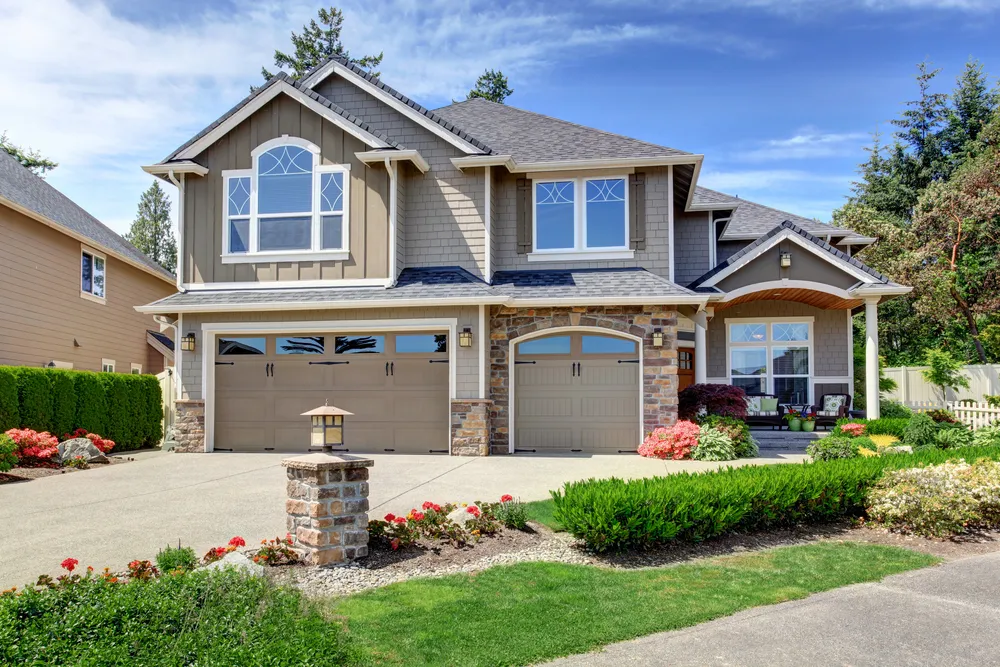
Your garage door takes up somewhere between 25 and 40 percent of the front of your house. That is a big chunk of what people see when they drive by or pull into the driveway. Yet most homeowners spend weeks agonizing over paint colors, shutters, and landscaping, then spend about ten minutes picking a garage door. The result is a door that works fine mechanically but does nothing for the house -- or worse, clashes with it.
Picking the right garage door style for your Charlotte home is not complicated, but it does require thinking about a few things beyond just color and price. The architecture of your house, the climate here in the Piedmont, your HOA rules if you have them, and how long you plan to stay all factor in. Below, we cover the major garage door styles, which Charlotte neighborhoods they work best in, and what to watch out for so you end up with a door you actually like looking at every day.
Why Style Matters More Than You Think
Remodeling Magazine's Cost vs. Value report has listed garage door replacement as one of the highest-ROI home projects for years running. Nationally, the return sits above 90 percent. In a competitive Charlotte real estate market, where homes in Ballantyne, South End, and Dilworth sell quickly when they show well, the visual impact of your garage door is real money.
Think of it this way. If you have a traditional colonial with a nice brick front and well-kept landscaping, then you stick a flat, white, builder-grade door on the garage, you have undercut everything else. Conversely, even a modest ranch in Matthews or Indian Trail can get a serious visual lift from a door with the right panel design, a coat of paint that ties into the trim, and maybe a row of windows to break up all that blank steel.
Style also affects resale perception. Buyers may not consciously notice a great garage door, but they absolutely notice a bad one. A door that fits the house reads as "well-maintained home." A mismatched or dated one reads as "deferred maintenance" -- even if the rest of the house is perfect.
The Four Main Garage Door Styles
Every garage door you see on the market is some variation of four basic styles. Here is what each one looks like, where it works, and where it does not.
Raised Panel
This is the default garage door in America, and it is what most Charlotte builders install on new construction. The door is divided into rectangular sections, each with a raised center that creates shadow lines across the surface. It comes in short panel (wider rectangles) and long panel (taller rectangles) configurations.
Raised panel doors work on almost anything -- ranch homes, two-story colonials, split-levels, transitional builds. They are inoffensive and familiar, which is both their strength and their limitation. If you live in a neighborhood like Highland Creek, Ardrey Kell, or a subdivision in Huntersville where most of the houses have raised panel doors, swapping yours for the same style in a different color or with windows added is a low-risk move that freshens the look without standing out in a bad way.
Where raised panel falls short is on homes with more character. A 1920s bungalow in Plaza Midwood or a custom-built estate in Myers Park deserves something with more personality.
Price-wise, raised panel doors are the most affordable option, typically running $1,000 to $2,000 installed for a standard 16x7 double door in insulated steel. Our 2025 Charlotte garage door cost guide breaks down pricing in more detail.
Carriage House
Carriage house doors are designed to look like the old swing-out barn doors you would have seen on an actual carriage house. They do not actually swing out -- they roll up on tracks just like any other modern garage door -- but the panel layout, decorative hardware (strap hinges, handles, clavos), and sometimes arched window inserts give them that old-world character.
This style has become extremely popular in the Charlotte market over the past decade, especially in neighborhoods where traditional and craftsman architecture dominates. You will see carriage house doors all over Weddington, Marvin, Ballantyne Country Club, Providence Plantation, and the older parts of Davidson. They pair well with brick, stone, and painted siding. On a craftsman-style home, a carriage house door with stained wood-grain panels and black iron hardware can look like it was part of the original design.
The biggest decision with carriage house doors is how far to take the look. A basic carriage house overlay on a steel door with simple hardware runs $1,800 to $3,000. Go with composite faux-wood panels, arched windows, and premium hardware, and you are looking at $3,000 to $5,500. Real wood carriage house doors start around $4,000 and can hit $8,000 or more depending on species and complexity. See our custom garage door guide for more on premium options.
One thing to watch out for: carriage house doors can look overdone on the wrong house. A small ranch home with a single-car garage does not need a door loaded up with decorative hardware and arched windows. Keep it proportional to the house.
Modern (Full-View and Flush Panel)
Modern garage door styles have gotten much more popular in Charlotte, partly because more modern and transitional homes are being built, and partly because homeowners are gravitating toward cleaner lines in general.
Full-view doors have an aluminum frame with glass panels -- clear, frosted, tinted, or obscured. They let a lot of light into the garage and create a striking look from the street. You see them on contemporary homes in South End, NoDa, and some of the newer builds along the Lake Norman corridor. They also work well on mid-century modern ranches that are getting renovated around Charlotte.
Flush panel doors are smooth and flat, with no raised sections or overlays. They create a clean, minimal surface that works on modern homes, but also on some transitional designs where a traditional door would feel too fussy. A flush panel door in a dark charcoal or matte black can completely transform the front of a house.
The catch with full-view glass doors is insulation. Glass is a terrible insulator, and even double-pane options do not match what you get from a steel door with polyurethane foam. In Charlotte, where summer garage temperatures can easily hit 120 degrees without insulation, that matters if the garage is attached to your home. If you use your garage as a workshop, gym, or hangout space, a full-view glass door might not be practical unless you also invest in climate control. For more on how insulation affects comfort and energy costs, read our piece on insulated vs. non-insulated garage doors.
Full-view aluminum and glass doors typically run $3,000 to $6,500 installed. Flush panel steel doors are more affordable at $1,500 to $3,500.
Recessed Panel (Shaker Style)
Recessed panel doors are the inverse of raised panel. Instead of the center of each section protruding outward, it is set back, creating a flat frame with a recessed center. The look is cleaner and more contemporary than raised panel, but not as stark as a fully flush door.
Shaker-style recessed panels have become popular on farmhouse and modern farmhouse homes, which is a style that has exploded across the Charlotte suburbs. Drive through newer developments in Waxhaw, Fort Mill, or Indian Trail and you will see a lot of white or light gray recessed panel doors paired with dark trim and board-and-batten siding. It is a clean match.
Recessed panel doors are priced similarly to raised panel, typically $1,200 to $2,500 for a double door installed. They are available from all the major manufacturers, so your installer should have plenty of options.
Matching Your Door to Charlotte's Most Common Home Styles
Here is a quick cheat sheet for matching garage door styles to the home types you see most around the Charlotte metro.
- Traditional colonial or Georgian (Myers Park, Eastover, SouthPark): Carriage house with divided windows and black or bronze hardware. Raised panel works too, especially with a strong color choice.
- Craftsman bungalow (Dilworth, Plaza Midwood, NoDa): Carriage house with vertical stile-and-rail panel layout and period-appropriate hardware. Stained or painted to match trim.
- Suburban two-story (Highland Creek, Ardrey Kell, Indian Trail): Upgraded raised panel with windows, or a mid-range carriage house. A simple style bump goes a long way on these homes.
- Modern farmhouse (Waxhaw, Fort Mill, Mooresville): Recessed or flush panel in white, gray, or black. Clean lines, minimal hardware, no arches.
- Contemporary or mid-century modern (South End, new builds): Full-view aluminum and glass, or flush panel in a bold color. Avoid anything with decorative hardware or faux-wood texture.
- Lake Norman custom estates: Depends entirely on the architecture, but carriage house in premium materials or custom wood are most common. See our Lake Norman upgrade guide for specifics.
How Charlotte's Climate Should Affect Your Choice
Style is not just visual. The Charlotte climate should factor into your decision, because some styles hold up better than others in our weather.
Charlotte gets about 43 inches of rain per year and sits in a humid subtropical zone where summer humidity regularly tops 80 percent. That combination is hard on certain materials. Real wood doors need staining or sealing every two to three years to prevent warping, cracking, and mold growth. Steel and composite doors handle the moisture much better with almost no maintenance.
Wind is another consideration. Charlotte averages about 45 days of thunderstorms per year, and we catch the remnants of hurricanes every few seasons. Doors with large glass panels are more vulnerable to windborne debris than solid panel doors. If you go with a full-view glass door, ask about impact-rated glass or polycarbonate panel options. For homes on exposed lots around Lake Norman or in open-terrain areas like Mooresville, wind resistance ratings are worth paying attention to.
Direct sun exposure also matters. West-facing and south-facing garage doors in Charlotte take a beating from UV rays, especially through the long summer months. Dark-colored doors absorb more heat and can warp over time if the construction quality is not there. A quality insulated door handles thermal expansion better than a cheap single-layer door. If your garage faces afternoon sun, stick with a lighter color or budget for a well-insulated door regardless of style.
HOA Restrictions in Charlotte Neighborhoods
A lot of Charlotte neighborhoods have HOAs that restrict what you can do with your garage door. Before you fall in love with a specific style, check your covenants. Common restrictions include:
- Color limitations: Many HOAs restrict garage door colors to a pre-approved palette that matches the neighborhood's exterior standards. Ballantyne Country Club, Piper Glen, and Providence Plantation are all known for this.
- Material restrictions: Some communities prohibit wood doors due to maintenance concerns, while others require wood or composite on premium lots.
- Style requirements: A few HOAs mandate a specific style (often raised panel or carriage house) to maintain a uniform look throughout the neighborhood.
- Window rules: Some communities require windows on garage doors, while others restrict them.
The fix is simple: pull up your HOA's architectural guidelines before you start shopping, or call your management company and ask. Getting this out of the way first saves you from ordering a door that gets rejected.
Windows: Yes or No?
Adding windows to a garage door is one of the easiest ways to upgrade its look. A row of windows across the top section breaks up the solid surface, lets natural light into the garage, and adds visual interest from the street. Most garage door styles are available with a range of window options, from plain rectangular inserts to arched, frosted, grille-patterned, or wrought-iron backed designs.
The practical argument for windows is lighting. If you spend any time in your garage -- working on projects, parking and unpacking groceries, walking through to the house -- natural light makes a real difference. Without windows, most garages are dark caves when the big door is closed.
The argument against windows is privacy. If your garage faces the street and you store things in there that you would rather people not see, clear windows are a concern. Frosted or obscured glass solves this -- you get the light without the transparency. Another minor downside is that windows slightly reduce the door's insulation value in that section, though the difference is small on a single row.
Windows typically add $150 to $500 to the cost of a door, depending on style and quantity. On most homes, the upgrade is worth every dollar.
Color and Finish Choices
The most common garage door color in the Charlotte area is still white, followed by various shades of brown, gray, and almond. But the trend over the last few years has been toward darker and bolder colors. Black and dark charcoal garage doors have gotten popular, especially on modern farmhouse and transitional homes. Dark green, navy, and deep red are showing up more on traditional homes where homeowners want the door to stand out rather than blend in.
Here are a few color principles that hold up across most home styles:
- Match or complement the trim. The garage door should relate to your shutters, fascia, and front door. It does not need to be the same color, but it should look like it belongs with them.
- Contrast with the body of the house. A white door on a white house disappears. A gray or black door on that same white house creates depth and visual interest.
- Consider the roof color. If your roof is a warm brown, a cool gray door might clash. Keep the undertones in the same family.
- Test in your lighting. Colors look different depending on your home's orientation and the surrounding landscape. A color that looks great on a north-facing garage might wash out or read too dark on a south-facing one.
Wood-grain finishes on steel and composite doors have gotten very realistic. If you like the look of stained wood but do not want the maintenance, a wood-grain steel or composite door in walnut, dark oak, or cedar tone is a solid option. These finishes work particularly well on carriage house designs.
Getting the Style Right the First Time
The best way to avoid a style mismatch is to see what the door will actually look like on your house before you commit. Some manufacturers and installers offer design tools that superimpose different door styles onto a photo of your home. It takes five minutes and it can save you from making a $2,000 mistake.
Another approach: drive around your neighborhood and look at houses similar to yours. Which garage doors catch your eye? Which ones disappear in a good way? Which ones look wrong? Chances are the doors you like are following the same general principles -- style that matches the architecture, color that ties into the trim, and details that are proportional to the house.
Picking the right garage door style for your Charlotte home does not require an architecture degree. Start with your house style, narrow down to one of the four main door categories, factor in climate and HOA rules, then dial in the details -- windows, color, hardware. If you want help narrowing your options or getting a feel for what different doors would cost on your specific house, give us a call at . We will connect you with a local installer who can walk you through the options in person and give you honest pricing. No high-pressure sales pitch -- just good advice on getting a door that fits your house and your budget.