 Best Garage Door Charlotte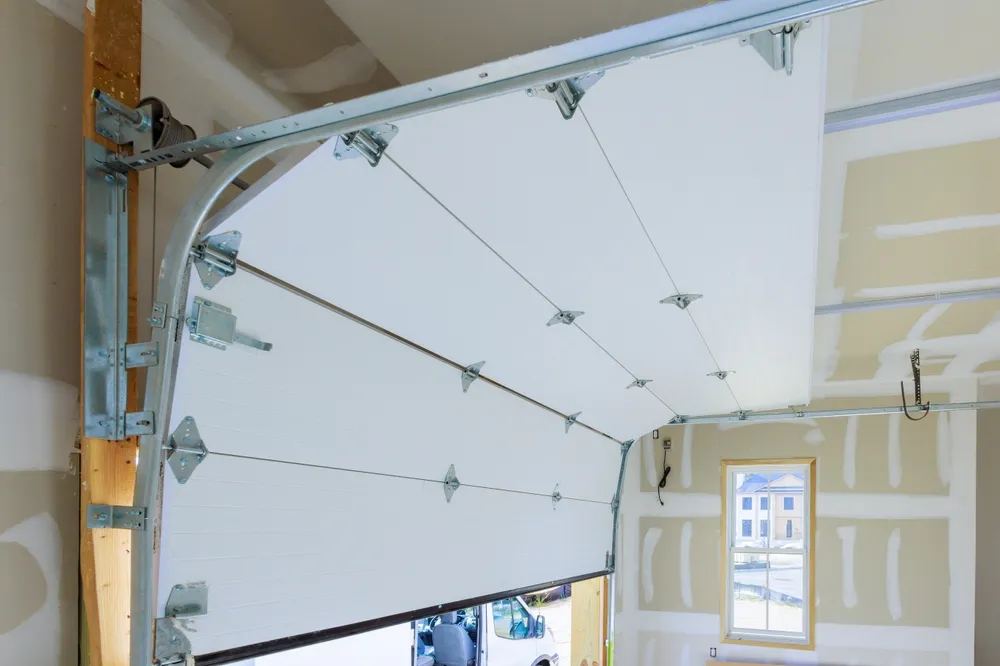
Your garage door rides on two metal tracks -- one on each side of the opening. These tracks guide the door's rollers as the door moves up, through the curve, and along the ceiling. When the tracks are properly aligned, the door glides smoothly and quietly. When they are not, you get scraping noises, binding, uneven gaps, and eventually a door that gets stuck or jumps off the track entirely.
Track alignment problems are one of the most common garage door issues, and Charlotte homeowners deal with them more often than you might think. Temperature swings, settling foundations, and everyday wear all contribute. Here is how to spot the problem, what causes it, and what you can do about it.
How Garage Door Tracks Work
A standard residential garage door has three track sections on each side:
- Vertical tracks: These run straight up from the floor on both sides of the door opening. They are bolted to the door frame with brackets called "flag brackets" or "jamb brackets."
- Curved tracks: These connect the vertical tracks to the horizontal tracks. They guide the door through the 90-degree turn from vertical to horizontal as the door opens.
- Horizontal tracks: These run along the ceiling from the curve back toward the rear of the garage. They are supported by hanging brackets bolted to the ceiling or ceiling joists.
The door's rollers (small wheels with stems) ride inside these tracks. Each door section has two or more rollers. A standard two-car door typically has 10 to 12 rollers total.
Signs Your Tracks Are Misaligned
- Scraping or grinding noises. If you hear metal-on-metal sounds when the door moves, the rollers are rubbing against the track walls instead of rolling freely. This is the earliest and most obvious sign.
- The door hesitates or jerks. Instead of moving smoothly, the door stops and starts, or jerks to one side during operation.
- Visible gaps between the rollers and track. Look at the rollers while the door is moving (from a safe distance). They should sit centered in the track. If a roller is pressed hard against one side of the track, that section is out of alignment.
- The door sits crooked when closed. One side is higher than the other, or there is a gap on one side but not the other.
- Rubbing or scraping marks on the track. Shiny spots or scratches on the inside of the track where the rollers are grinding.
- The door gets stuck partway. It opens or closes fine for the first few feet, then binds or stops at a specific point.
- Worn or damaged rollers. Misaligned tracks chew up rollers fast. If you are replacing rollers often, the tracks may be the real problem.
What Causes Track Misalignment
Loose Brackets
The tracks are held in place by brackets bolted to the door frame and ceiling. Over time, the vibration from daily door operation loosens these bolts. A loose bracket allows the track to shift, even slightly, which throws off the alignment. This is the most common cause and the easiest to fix.
Impact Damage
Bumping the track with a car, lawnmower, bicycle, or anything else can bend or shift it. Even a minor bump can create a kink or dent that catches the rollers. If the door started acting up right after something hit the track, that is your answer.
Foundation Settling
Charlotte sits on Piedmont clay soil, which expands and contracts with moisture changes. Over time, this causes foundations to shift slightly. When the garage floor or frame moves, the tracks go with it. Homes in areas with heavy clay soil -- common throughout Matthews, Indian Trail, and south Charlotte -- are especially prone to this.
Temperature Changes
Metal tracks expand in heat and contract in cold. Charlotte's temperature swings (from 95 degrees in summer to 20 degrees in winter) cause the tracks to shift slightly with the seasons. This is usually minor, but combined with loose brackets, it can cause problems.
Worn Rollers
Old, worn rollers can cause the door to track poorly, which then puts stress on the tracks and pushes them out of alignment. Sometimes the track is fine but the rollers are the real issue.
DIY Track Inspection
You can check your track alignment yourself with a few simple tools:
- Disconnect the opener. Pull the emergency release cord so the door moves freely by hand.
- Check the vertical tracks with a level. Place a 4-foot level against the inside face of each vertical track. They should be perfectly plumb (straight up and down). If a track leans in or out, it needs adjustment.
- Check the gap between rollers and track. With the door closed, look at the gap between the roller and the track on both sides. It should be the same on both sides -- about 1/4 inch. If one side is tight and the other has a gap, the tracks are not parallel.
- Look at the horizontal tracks. They should slope slightly downward from the curve toward the back of the garage (about 1/4 inch per foot). This slight slope helps the door stay open. If a horizontal track is level or slopes upward, the door may creep closed on its own.
- Check all brackets and bolts. Go around every bracket and tighten any loose bolts. Many alignment problems are just loose hardware.
- Inspect the tracks for bends or dents. Run your hand along the inside of each track (with the door up and secured). You can feel dents or kinks that are hard to see.
Minor Adjustments You Can Make Yourself
If your inspection finds loose brackets or a slightly out-of-plumb vertical track, you can fix it:
- Loosen the bolts on the bracket that needs adjusting (do not remove them completely).
- Tap the track gently into position using a rubber mallet. Use a level to check as you go.
- Tighten the bolts firmly once the track is in the right position.
- Test the door by opening and closing it a few times by hand.
For small dents or kinks in the track, you can sometimes straighten them by placing a block of wood against the dent and tapping it with a hammer. This works for minor dents only. A badly bent track needs to be replaced.
Always lubricate the tracks and rollers after making any adjustments. White lithium grease on the rollers and a light spray of silicone lubricant on the tracks helps everything run smoothly.
When to Call a Professional
Track alignment is one of those repairs where the line between DIY and professional is pretty clear. Call a garage door technician if:
- The track is badly bent or kinked. A track with a significant bend needs to be replaced, not straightened. Replacing a track involves removing the door from that side, which requires handling the tension of the springs.
- The door has jumped off the track. Getting a door back on track safely requires experience. The door is heavy (150 to 250 pounds for a standard two-car door) and the springs are under tension. This is not a DIY job.
- The horizontal tracks need adjustment. These are harder to access (up near the ceiling) and the angle has to be precise. Getting it wrong can cause the door to fall.
- The problem keeps coming back. If you tighten the brackets and the alignment goes off again in a few weeks, there is an underlying issue -- maybe a settling foundation, a bad spring, or tracks that are worn out and need replacement.
- You hear popping or snapping sounds. This could mean a roller is about to break free of the track, which is dangerous. Stop using the door and call for service.
Track replacement runs $125 to $250 per track for parts and labor, depending on the track type and door size. Most technicians can do it in under an hour. A full track realignment without replacement is usually $75 to $150 as part of a maintenance visit.
Preventing Track Problems
Most track issues are preventable with basic maintenance:
- Check and tighten all track brackets twice a year.
- Lubricate rollers and tracks every six months.
- Replace worn rollers before they damage the tracks. Nylon rollers last longer and are gentler on tracks than steel rollers.
- Keep the track area clear of bikes, tools, and anything else that could bump the tracks.
- Watch for signs of unusual noise or rough operation -- they often point to alignment issues before they get serious.
Having track problems or need a professional alignment check? Call to schedule service with a Charlotte garage door company.